News Center
07-24
Innovative Breakthrough! Chemical Additives Enable Green Transformation in the Textile Industry
Recently, a well-known chemical adjuvant company successfully developed a new type of environmentally friendly and efficient chemical adjuvant, realizing green production in the textile industry and injecting new vitality into the industry. This chemical adjuvant not only has excellent performance but also significantly reduces its environmental impact, contributing to sustainable development.
07-24
Chemical adjuvants help crops resist wilt
A study in the agricultural field has discovered that a special chemical adjuvant can effectively improve the resistance of crops to wilt disease. This chemical adjuvant enhances the plant's own defense mechanisms, improving the function of the plant's immune system, effectively inhibiting the spread of wilt disease, and providing strong support for agricultural production.
07-24
Chemical Adjuvants Power Water Treatment Upgrades
In the water treatment field, a novel chemical adjuvant has caused a heated response. This chemical adjuvant can efficiently remove organic pollutants and heavy metals from water, while causing no secondary pollution to the water quality. Its excellent treatment effect and environmentally friendly characteristics make it a significant breakthrough in the water treatment industry.
07-24
Chemical additives boost battery technology innovation
Recently, a novel chemical additive has achieved a breakthrough in the battery field. This chemical additive can improve the energy density and charge-discharge efficiency of batteries, extend the service life of batteries, and bring new breakthroughs and possibilities to battery technologies in areas such as electric vehicles and Mobile phones.
07-24
Chemical additives assist in plastic recycling and reuse
Plastic pollution has long been a serious global problem, but a new chemical additive is changing that. This additive effectively breaks down plastic and, through a specific process, converts it into recycled plastic raw materials, making a significant contribution to environmental protection and sustainable development.
07-24
Chemical Additives Boost Fire Safety Upgrades in Building Materials
Recently, a flame-retardant chemical additive has been widely used in the field of building materials. This chemical additive can effectively inhibit the occurrence and spread of fires, improve the fire rating of buildings, and play an important role in ensuring the safety of people's lives and property.
07-24
Chemical auxiliaries contribute to innovation in pharmaceutical research and development
Recently, a novel chemical adjuvant has shown great potential in the pharmaceutical field. This chemical adjuvant can improve drug solubility and stability, promote drug efficacy release, provide strong support for drug research and development innovation, and is expected to drive further breakthroughs in the pharmaceutical field.
07-23
What are the advantages of water-based defoamers?
Defoamers are agents that have chemical and interfacial chemical defoaming effects. As defoamers, there are low-carbon alcohols, mineral oils, organic polar compounds, and silicones. Their forms include oil type, solution type, emulsion type, and foam type. As defoamers, they are characterized by strong defoaming power, stable chemical properties, physiological inertness, heat resistance, oxygen resistance, corrosion resistance, gas solubility, gas permeability, easy dispersion, easy penetration, low solubility in the defoaming system with no chemical effects, low dosage, and high efficiency.
07-23
Faced with increasingly stringent resource and environmental constraints, the pressure to conserve energy and reduce emissions in the petroleum and chemical industry intensified during the 12th Five-Year Plan period. Actively responding to global climate change, firmly establishing a green and low-carbon development concept, and accelerating the construction of a resource-saving, environmentally friendly, and inherently safe development model are not only fundamental requirements for transforming the development model during the 12th Five-Year Plan period, but also an inevitable mission for China's transformation from a major petroleum and chemical industrial power to a strong one.
07-23
Demand in the Asian benzene market may improve starting in the third quarter.
Singapore, June 7: Asian benzene demand may improve in July and August as downstream plants resume production after maintenance shutdowns. Meanwhile, Asian benzene supply will decrease due to the planned shutdown of two production units in the region.
07-23
Ozone pollution is frequently occurring; collaborative control is urgently needed.
Although a rainfall washed away the heat in Beijing, the Beijing Municipal Environmental Protection Bureau predicts that ozone will be the primary pollutant in Beijing's air on June 4. Beijing is not the only city affected; according to the Ministry of Ecology and Environment, due to the sustained high temperatures and southerly winds near the ground, most of the Beijing-Tianjin-Hebei region, most of Shandong Province, and parts of northern Henan Province may experience light to moderate ozone pollution.
07-23
Wacker Chemie AG's sales in the first quarter of 2018 reached the same level as the previous year, while earnings before interest, taxes, depreciation and amortization (EBITDA) increased significantly year-on-year. The Munich-based chemical group achieved sales of €1.2176 billion in the reporting period (€1.2188 billion in the first quarter of 2017). Increased product prices, particularly for silicones, and further optimization of the product portfolio in the chemicals business drove sales growth.
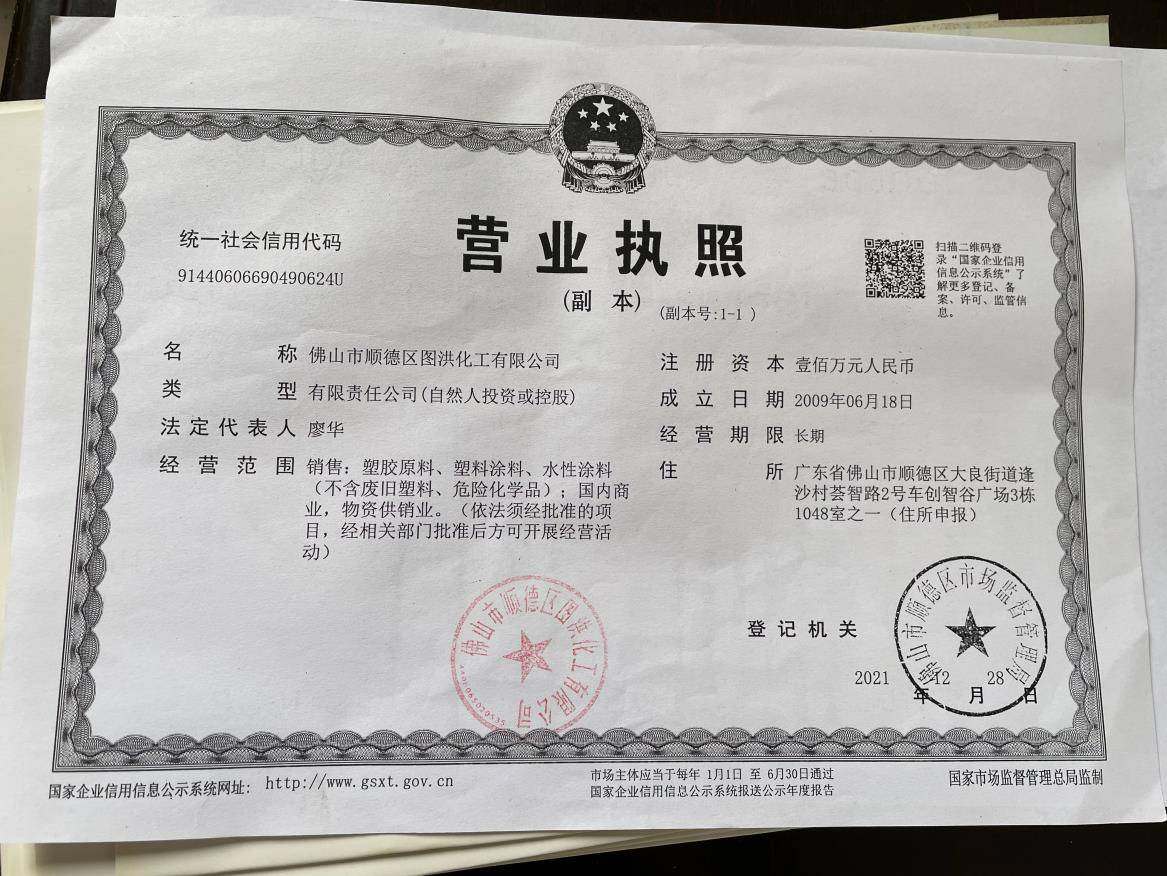
Copyright©2025 Foshan Shunde District TuHong Chemical Co., Ltd All Rights Reserved